
Rhonda Ortiz Rhonda Ortiz

In the News: Catholic Faith at Hope College

In the News: Catholic Faith at Hope College

Father Bill VanderWerff joins Hope College students for dinner before an annual blessing of dorm rooms. Photo by Aaron Estelle.

Father Bill VanderWerff joins Hope College students for dinner before an annual blessing of dorm rooms. Photo by Aaron Estelle.

As the St. Benedict Institute seeks to add a chaplain to its ranks, the leaders of this campus Catholic center at Hope College, a Christian institution of higher education in the Dutch Reformed tradition, know the ideal candidate will be someone who can form relationships with students and engage the academy in ecumenical discussion. He also should have a strong background in Scripture.

“We are guests on a Protestant campus that loves the word,” said Jared Ortiz, a Catholic assistant professor in the religion department at Hope and co-founder of the St. Benedict Institute. “And we need someone who loves Protestants.”

Read the rest at Our Sunday Visitor.

Read More
Day of Study Rhonda Ortiz Day of Study Rhonda Ortiz

(VIDEO) “Hope for Restoration: Radical Hospitality and Prison Reform” Conference on Restorative Justice

“Hope for Restoration: Radical Hospitality and Prison Reform”

A Conference on Restorative Justice Organized by Calvin Prison Initiative students from the R.A. Handlon Correctional Facility

Saturday, March 4, 2017
9:00 a.m. - 4:00 p.m.
Maas Center at Hope College
264 Columbia Ave.
Holland, Michigan 49423

The Saint Benedict Institute hosted “Hope for Restoration: Radical Hospitality and Prison Reform,” a day-long conference on restorative justice, on Saturday, March 4, from 9 a.m. to 4 p.m. in the Maas Center at Hope College, Holland, Michigan.

The public was able to do something that the event’s organizers cannot: attend. The conference was conceived and organized by inmates from the Richard A. Handlon Correctional Facility in Ionia, who will have a chance to watch recordings of the proceedings later.

The conference’s keynote speakers were Ted Lewis of the Center for Restorative Justice and Peacemaking at the University of Minnesota; Kristen Deede Johnson, associate professor of theology and Christian formation at Western Theological Seminary; and Eric Boldiszar, Handlon inmate and Calvin Prison Initiative student, through a pre-recorded presentation.

Other speakers and panelists included Bishop David J. Walkowiak, Diocese of Grand Rapids; Rep. David LaGrand, state representative (D) for Grand Rapids; Rep. Joe Haveman, former state representative (R) for Holland; Troy Rienstra of Network for Real Change; Warden DeWayne Burton of Richard A. Handlon Correctional Facility; Tricia Worrell, director of prison and jail ministry, Diocese of Grand Rapids; and Julie Bylsma and Todd Cioffi of Calvin Prison Initiative.

In addition to the Saint Benedict Institute, the conference was presented in partnership with Hope College, Calvin College, Calvin Seminary, the Calvin Prison Initiative and the Corpus Christi Foundation.  The Calvin Prison Initiative is a partnership between Calvin College and Calvin Theological Seminary that provides a Christian liberal arts education to inmates at Handlon.  A total of 40 inmates are participating in the initiative, which leads to a Bachelor of Arts degree in ministry leadership.

Event co-sponsors included Hope Campus Ministries, the Center for Ministry Studies, the Dean of Social Sciences, the Dean of Arts and Humanities, the Departments of Art and Art History, History, Philosophy, Political Science, Psychology, Religion, Sociology and Social Work; Encounter with Cultures Program, Emmaus Scholars Program, Hope United for Justice, Hope Catholics, Hope College Republicans, Hope College Markets & Morality, and the Tocqueville Forum.


Read More
News Jared Ortiz News Jared Ortiz

Gay and Christian: The Conversation Continues

The Gay and Christian Symposium was a riveting and moving event for everyone. The Saint Benedict Forum has three follow up events to keep the conversation going: Sr. Miriam James Heidland on Theology of the Body, a screening of the film Desire of the Everlasting Hills, and Pastor Adam Barr on Pastoral Approaches to Gay Christians...

8 by 11 flyer logo follow up event

The Gay and Christian Symposium was a beautiful and moving event. The Saint Benedict Forum is hosting three follow up events to highlight major themes and keep the conversation going. 

CALLED TO LOVE: A HEART FULLY ALIVE A Workshop with Sr. Miriam James Heidland Tuesday, March 1 · 7:00 − 9:00 p.m.

Why are we so attracted to beauty and why do we long for infinite satisfaction and a life of meaningful communion? In this workshop we will discover what is revealed in our  humanity—male and female—what is at the root of our deepest desires and how, through the healing of our call to love, our lives become fruitful and free.  Participation is limited to twenty students.

Contact Dr. Jared Ortiz (jjortiz@hope.edu) if you are interested in participating.

DESIRE OF THE EVERLASTING HILLS Movie Screening with film writer David Michael Phelps Wednesday, March 9 · 8:00 p.m. · Winants

Three intimate and candid portraits of Catholics who try to navigate the waters of self-understanding, faith, and homosexuality. Talk-back after the film with the writer and producer, David Michael Phelps, a Hope College alum.

Free and open to the public.

PASTORAL APPROACHES TO SAME-SEX ATTRACTION A Workshop with Pastor Adam Barr Tuesday, March 15 · 7:00 − 9:00 p.m.

Are you considering a future in vocational ministry, or do you simply want to help serve faithfully as a layperson in the local congregation? Every church leader should be equipped to minister with integrity at the intersection of sexuality, Scripture and pastoral practice. In this workshop, led by Adam Barr, author of Compassion Without Compromise: How the Gospel Frees Us to Love Our Gay Friends Without Losing the Truth, you’ll have an  opportunity to participate in a hands-on workshop, exploring these issues from a perspective that embraces a traditional understanding of human sexuality while  encouraging radical hospitality for all people.  Participation is limited to twenty students.

Contact Dr. Jared Ortiz (jjortiz@hope.edu) if you are interested in participating.

Read More
Catholic Speaker Series, News Jared Ortiz Catholic Speaker Series, News Jared Ortiz

Gay and Christian: Exploring Vocation, Friendship, and Celibacy

The Saint Benedict Forum is pleased to host an ecumenical symposium, "Gay and Christian: Exploring Friendship, Vocation, and Celibacy." Eve Tushnet, Wesley Hill, and Joshua Gonnerman will all be speaking at this timely event. The symposium is free and open to the public.
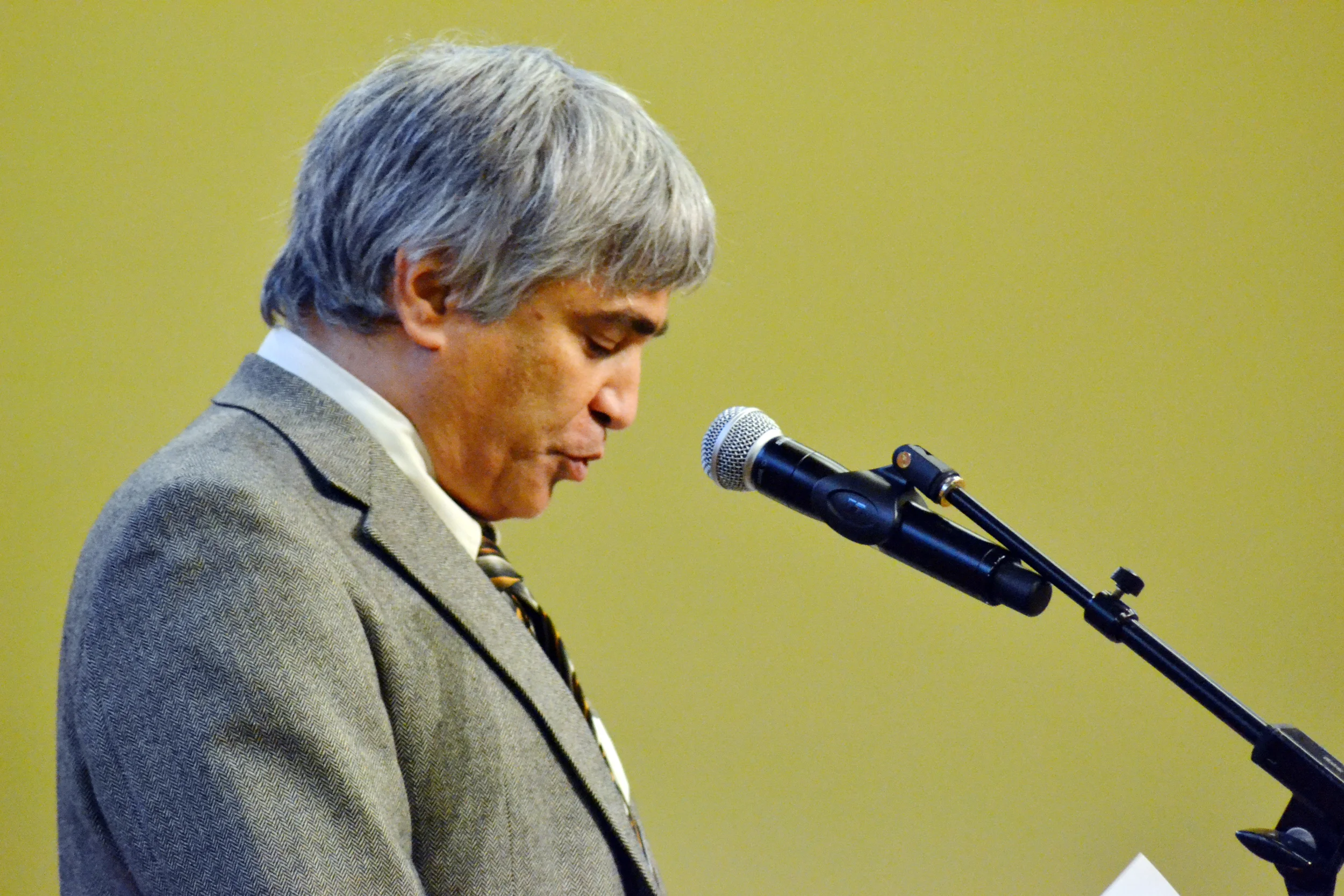
DSC_3842

The Saint Benedict Forum was pleased to host Eve Tushnet, Joshua Gonnerman, and Ron Belgau for a powerful symposium on Gay and Christian: Exploring Vocation, Friendship, and Celibacyon Monday, February 22, 2016 at Hope College.  All three speakers gave powerful testimonies and inspired a diverse crowd of 300 students, faculty, administration, parishioners, and others.

The three talks were:

“The Radical Challenge of Gay Celibacy”Eve Tushnet

“A Different Conversation: Changing How We Think about Gay PoliticsJoshua Gonnerman

“Understanding the Bible's Teaching on Homosexuality”Ron Belgau

See below for the video of the talks.

Ron Belgau is the cofounder of Spiritual Friendship, an ecumenical group blog dedicated to recovering the Church's traditional teachings on friendship and applying them to contemporary debates about homosexuality. He has studied philosophy at the graduate level at St. Louis University and Notre Dame, and has taught ethics, medical ethics, and philosophy of the Human Person at St. Louis University. He is a nationally known speaker, and in 2015 became the first openly gay Catholic to speak at the World Meeting of Families, in conjunction with Pope Francis's visit to Philadelphia

Joshua Gonnerman is a writer and doctoral student in theology at The Catholic University of America, writing his dissertation on Augustine's theology of grace and predestination. His articles have appeared in First Things, Spiritual Friendship, and PRISM Magazine.

Eve Tushnet is the author Gay and Catholic: Accepting My Sexuality, Finding Community, Living My Faith and Amends: A Novel. She lives in Washington, DC. Hobbies include sin, confession, and ecstasy.  She blogs at Patheos and has covered topics ranging from pro-life horror movies to the US National Figure Skating Championships. She was received into the Catholic Church in 1998.

This event is co-sponsored by Hope College's Religion Department, Women's and Gender Studies, Campus Ministries, Center for Ministry Studies, GRACES, and the Our Sunday Visitor Institute.

Read More
Catholic Speaker Series, News Jared Ortiz Catholic Speaker Series, News Jared Ortiz

Have a Heart: Dr. Anthony Esolen on the Value of a Christian Liberal Arts Education (VIDEO)

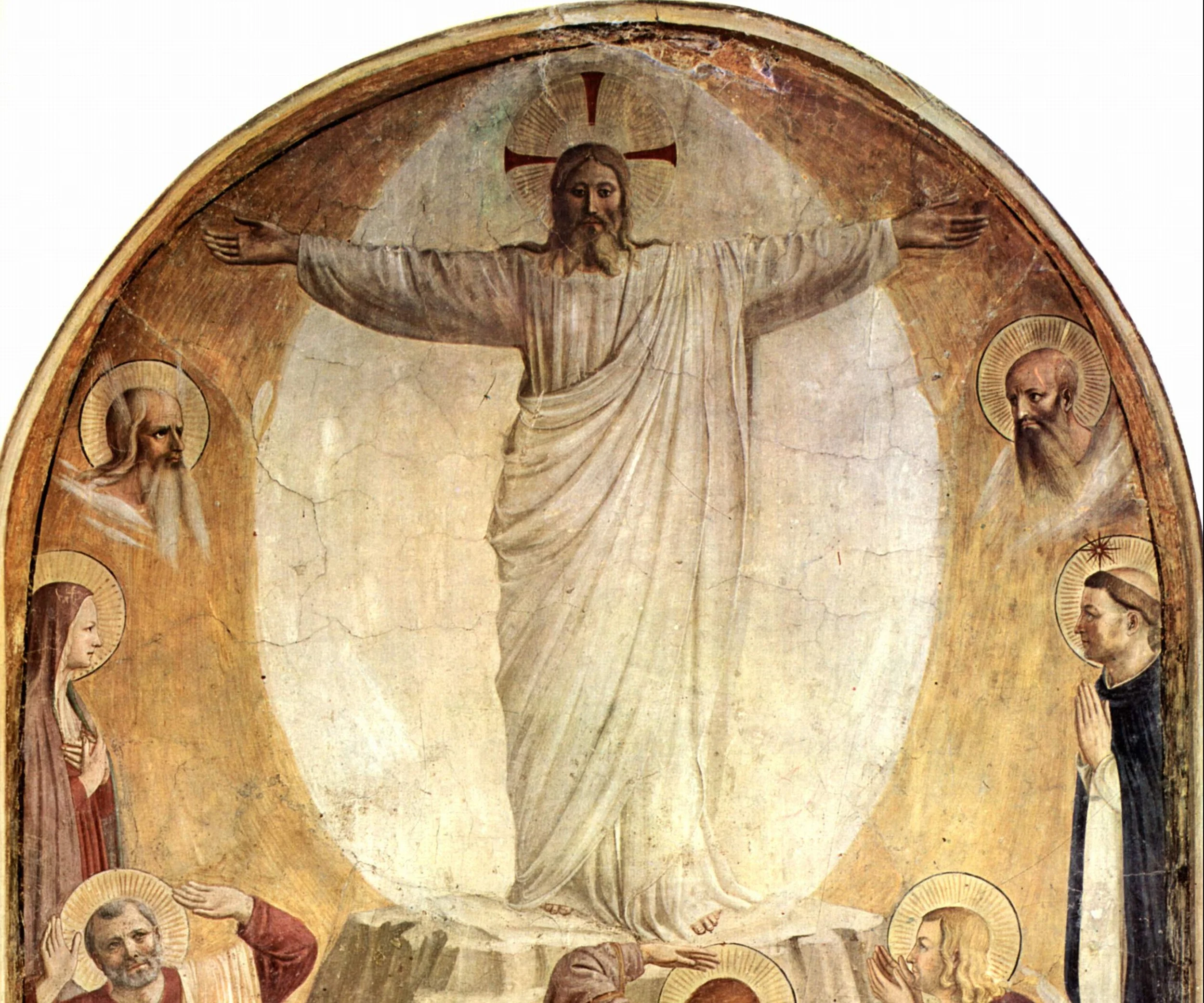
Dr. Anthony Esolen of Providence College lectured on “Liberal Arts and the Christian College in a Post-Christian World.” Dr. Esolen spoke of the rare and precious gift that only a Christian liberal arts college can bestow - an education with a heart.
dsc_0463.jpg

by Maria Gowon, Public Accounting Major, Class of 2016

Dr. Anthony Esolen of Providence College lectured on “Liberal Arts and the Christian College in a Post-Christian World.” His lecture drew an eclectic group of educators, students, clergymen and the general public. His talk was similarly eclectic, including a casual recitation of a portion of Dante’s La Vita Nuova and a nod to Kim Kardashian. Even so, his theme was clear. Dr. Esolen spoke of the rare and precious gift that only a Christian liberal arts college can bestow - an education with a heart.

DSC_0308

Dr. Esolen described to us the state of the students he is currently teaching. He is grateful for the bright eyed and bushy tailed freshmen who “do not yet have mildew growing on their souls,” but instead have unbounded amounts of enthusiasm. They also have a lot to learn. Many step into his Classics courses never having heard of Milton, Tennyson, or Chaucer. Upperclassmen (who are sans the enthusiasm) are also unacquainted with these literary pioneers. This is not their fault, but rather offers a critique of the present state of high school education.

The American educational system looks bleak: schools eerily resemble prisons or factories, and should it surprise us when form begins to follow function? Class work places an unhealthy emphasis on 20th century dystopian novels and has a strong aversion to anything that even faintly bears the scent of theology. Dr. Esolen holds that the attempt to excise theology and all traces of Christ from high school education has removed the true core - the heart - of education.

DSC_0303

According to Dr. Esolen, many secular colleges and universities are no different. Secular universities have abandoned their ties to early and medieval Christian writers. They unknowingly do themselves a disservice by severing themselves from literature brimming with ideas of truth, love, and what it means to be human. Additionally, there is no multidisciplinary dialog. There is no longer a core, no center axle around which the university rotates. Instead, each school or department operates in isolation, training their students in narrow, robotic excellence. Thus, the “university ceases to be a university, but becomes a polytechnical institution,” a place starved of wonder, depth, and meaning. There is no bigger picture, nothing held in common, and nothing to unite a public save a shared zip code.

DSC_0334

Dr. Esolen went on to say that polytechnical institutions will not continue to grow unchallenged, for students are not machines made to function in a fractured, utilitarian manner. We are humans, “with great heart.” The Christian liberal arts college, he states, recognizes this. Through a liberal arts education and an abiding devotion to theology, these colleges help students keep their sense of wonder through brushes with beauty, providing a place to practice contemplative longing. Rather than disenchantment, students and professors alike know that they are “related to one another, embarking on a pilgrimage, and bound by something that transcends all of them.” Dr. Esolen related one such brush with beauty by describing how a former student came to know Christ through exposure to great Catholic-influenced literature.

DSC_0348

Hope students, I imagine, understand a little about this. It’s the surprising acknowledgement that you can enjoy your general education required courses more than your major courses. It’s the harmony that exists between the Sailing and Physics Clubs. It’s also the dreaded interdisciplinary studies and coffee infused conversations that all center around the question, “Why?”

DSC_0291

I was not fooled by Dr. Esolen’s soft-spoken character and his unassuming poetical delivery; his lecture was nothing short of a valiant cry for the preservation of beauty, and a charge for both educators and students to “behold” more often. There was nothing piecemeal or utilitarian in his demeanor; his heart was indeed behind his ribs, in his legs, and in his hands. He was guided by the belief that instruction in love, by love, is an education that makes us more human. And I think he might be right.

This event was co-Sponsored by Hope College's Religion Department,  the English Department,  the Philosophy Department,  the General Education,  Senior Seminar,  and Cultural Heritage Programs; Klesis,  Markets & Morality,  and the Our Sunday  Visitor Institute.

Anthony Esolen teaches Medieval Literature and Theology, Renaissance Literature, and the Development of Western Civilization at Providence College. He is a senior editor for Touchstone: A Journal of Mere Christianity. He is author of Ten Ways to Destroy the Imagination of Your Child and, most recently, Reflections on the Christian Life. Professor Esolen has also translated Dante’s Divine Comedy.

st-andrews-cathedral-fullres (2)
Read More
Day of Study, News Jared Ortiz Day of Study, News Jared Ortiz

Deification Day of Study

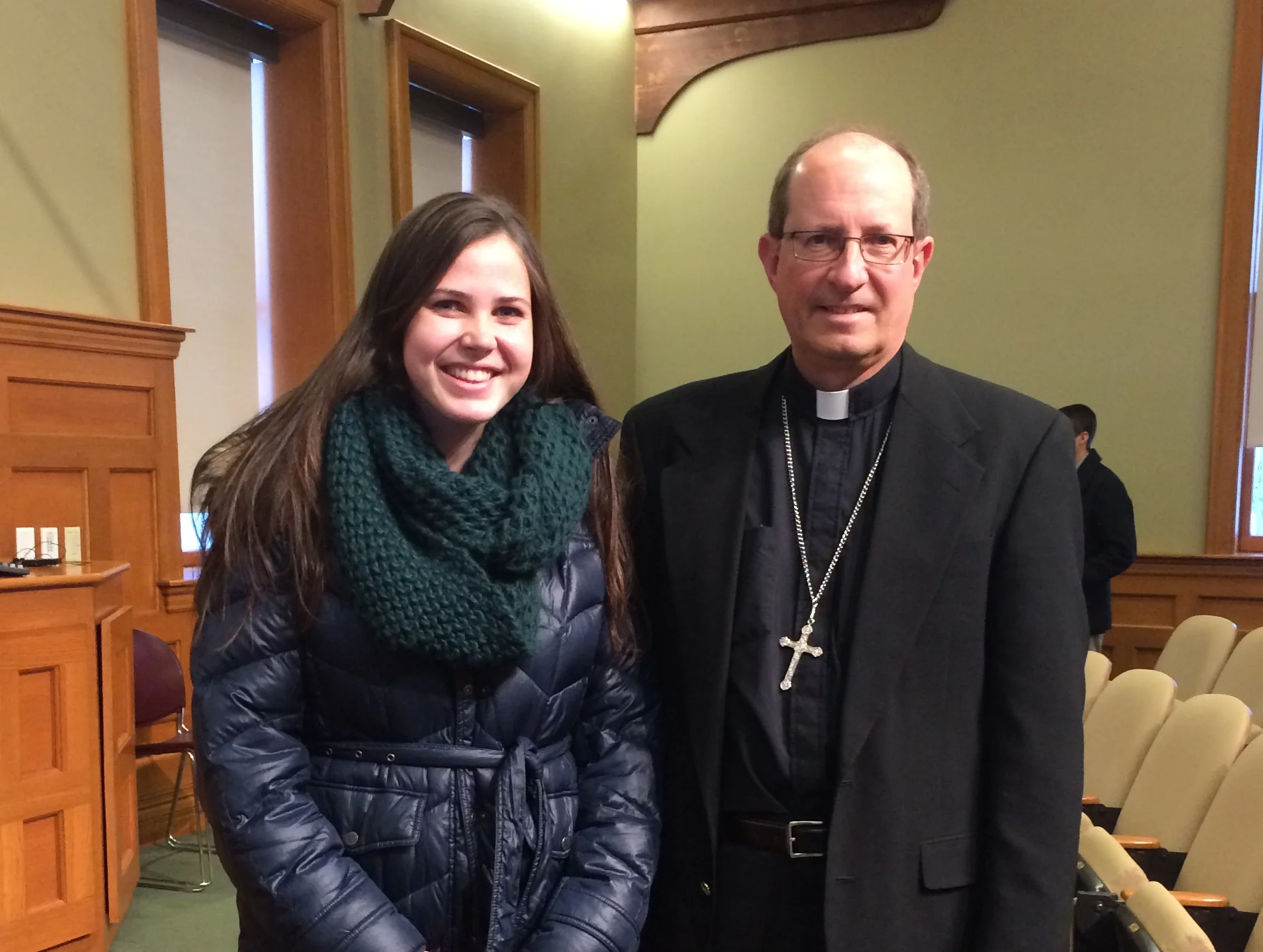
On March 7, the Saint Benedict Forum, Western Theological Seminary, and Hope College hosted a Day of Study on the theme, "Foundational Issues in the Western Understanding of Deification."
fra-angelico-transfiguration1-e1423929048241.jpg

On Saturday, March 7th, the Saint Benedict Forum, Western Theological Seminary, and Hope College hosted a Day of Study on the theme, "Fundamental Issues in the Western Understanding of Deification."The overall goal of the Day of Study is to provide a leisurely opportunity for scholars in the region to explore together questions of theological and cultural import.

There were four informal papers:

  • Carl Mosser (Notre Dame) - “How Deification was Mislabeled as ‘Eastern’: Ritschl, Harnack, and the Russian Diaspora”

  • Jared Ortiz (Hope College) - “Deification in the Early Latin Liturgy”

  • Daniel Keating (Sacred Heart Seminary) - “Typologies of Deification”

  • Kirsten Laurel Guidero (Marquette University) - "A Pneumatic Deification? Resources and Trajectories from the Traditions on Theosis."

IMG_7438

A dozen interlocutors from the region were invited to engage each paper in an extended period of discussion.  The discussions were thoroughly enjoyable and spilled over into the breaks and lunch and after the event.

IMG_7436

Here are a few more pictures from this delightful day:

DSC01643a

DSC01631a

IMG_20150307_144221632_HDR

IMG_20150307_144504508

IMG_20150307_144352480_HDR

Read More
Catholic-Reformed Dialogue, News Jared Ortiz Catholic-Reformed Dialogue, News Jared Ortiz

A Catholic Bishop Comes to Hope College

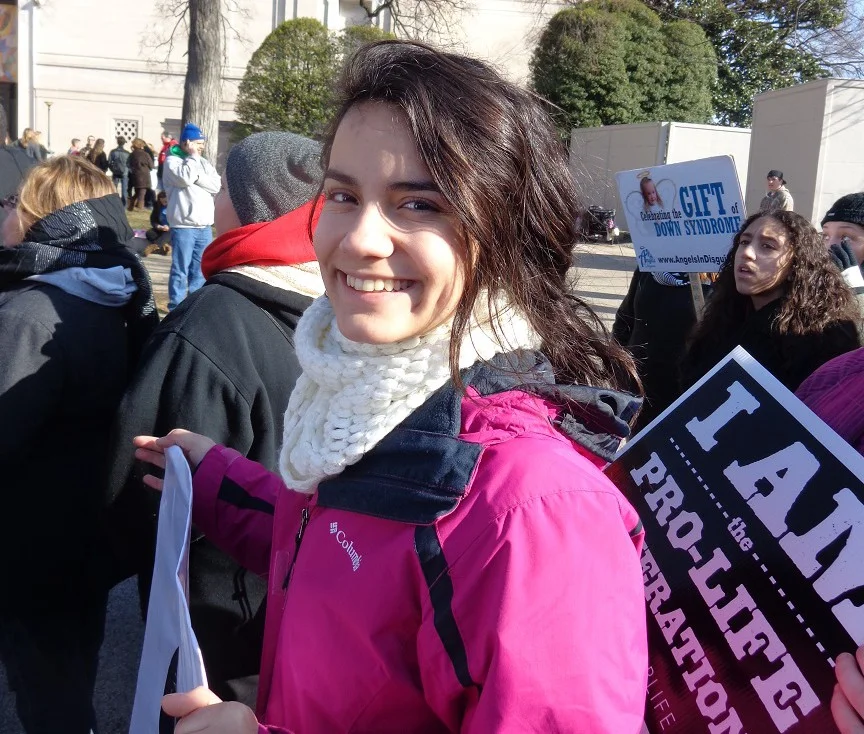
VIDEO AVAILABLE: His Excellency David Walkowiak, Bishop of the Diocese of Grand Rapids, visited Hope College on Wednesday, February 4, 2015, for an informal question and answer session.
By Anna Jones, Theater Major, Hope College '18

It was Wednesday, February 4, and faculty, students, and members of the surrounding community were gathering in Winants Auditorium in Hope College’s Graves Hall. Some came with questions, others with pencils or laptops at the ready, but all with welcoming hearts. Bishop David Walkowiak of Grand Rapids was invited to speak at Hope College by the Saint Benedict Forum. The event was co-sponsored by Hope’s Campus Ministries, Religion Department, and Office of the Provost. This was to be the first time in Hope College’s 149-year history that a Roman Catholic Bishop would make an official visit to the college. As a Catholic student at Hope, I was incredibly excited to be a part of this historic event.

After a brief introduction by the Chair of Hope’s Religion Department, Dr. Jeff Tyler, Bishop David Walkowiak of Grand Rapids took the podium. The bishop spoke for about twenty minutes regarding his vision for the Diocese of Grand Rapids, an office that he has held for just under two years. Bishop Walkowiak was appointed by Pope Francis to serve the eleven counties and over 191,000 Catholics that constitute the Grand Rapids Diocese.

An extensive question and answer session followed Bishop Walkowiak’s opening statements. There were a wide variety of questions asked from the diverse spectrum of attendees. The questions ranged from liturgical to political, covering issues from Eucharistic protocol to reaching out to the Latino community. While these topics were both intriguing and informative, what hit home most for me was Bishop Walkowiak’s effort to “have the scent of his flock,” as Pope Francis exhorts.

profs and community pondering

profs and community pondering

About one third of the population of the Diocese of Grand Rapids is Latino. In an effort to better serve this segment of his flock, Bishop Walkowiak learned to speak Spanish. This ability enables him to personally extend the sacrament of Confirmation and celebrate Mass for the Spanish speaking part of his community. Bishop Walkowiak’s commitment to being personally present to his people shows just how dedicated he is to the service of his office.

Bishop Walkowiak’s devoted service can be seen to spring from a deep knowledge about the Christian life. He shared his knowledge in response to a question concerning the nature of love in the Christian vocation. Bishop Walkowiak expounded upon the idea of agape, that highest love of disinterested self-sacrifice. The bishop commented that agape is “outward bound,” it is the unconditional giving of oneself.

With his unique mixture of quiet dignity and authentic congeniality, there couldn’t have been anyone more suited to present to Hope College an example of what ecclesial service should look like. Bishop Walkowiak demonstrated to our Protestant brothers and sisters the unity that the Church desires, and in turn, Hope College recognized and reciprocated that ecumenical desire.

Rebecca and Bishop

Rebecca and Bishop

After the conversation in Winants, Bishop Walkowiak, along with members and supporters of the Saint Benedict Forum, enjoyed Christian fellowship and dinner in Hope College’s Maas Conference room. After the dinner, following a long established tradition for speakers who visit Hope, Bishop Walkowiak shared a personal testimony with those present. Bishop Walkowiak’s story wasn’t one of a dramatic conversion or wrought with great life-changing events. It was the story of an ordinary boy who grew up in a good Catholic home. It was the story of a young man who heard God’s call and had the courage to trust and follow. One of the most poignant moments of Bishop Walkowiak’s testimony was when he described how his mother taught him a vocation prayer to pray each day.

“O God, Who enlightens the minds and inflames the hearts of the faithful by the Holy Spirit, grant that by the same Spirit I may know my true vocation in life and have the grace to follow it faithfully. Through Christ our Lord. Amen.”

Its simple sweetness became a part of Bishop Walkowiak’s routine as he discerned his call to the priesthood. Bishop Walkowiak’s visit to Hope College was yet a further step towards achieving the Christian unity to which Christ calls us.

The video of Bishop Walkowiak's talk and Q & A session is available here.

Read More
News Jared Ortiz News Jared Ortiz

March for Life: Becoming Missionary Disciples

Every year on the anniversary of the Roe v. Wade decision, hundreds of thousands of people come to Washington, D.C. to peacefully protest against abortion and to bear witness to the dignity of every human life. The Saint Benedict Forum is proud to be bringing its first group of students to the March this year.
Marchers have been gathering in Washington D.C. since 1974 on January 22nd to protest the Supreme Court’s landmark Roe v. Wade decision legalizing abortion in the USA. While this was the 41st annual “March for Life,” joining the event for possibly the first time were students from Hope College. The Saint Benedict Forum sponsored the Hope College contingent.

The group departed from Holland around 3:30pm the day before the march, arriving at their destination safe, but tired around 2am Thursday morning. After a short night’s sleep the team was up and off to its first event, the “Life is Very Good” rally sponsored by the Diocese of Arlington, VA and held at the Patriot Center on the campus of George Mason University. Any sleepiness was soon dispelled by the inspirational message of Catholic Apologist Chris Stefanick, the music of Ike Ndolo Band, and the rousing homily brought by Bishop Loverde of the host diocese. Besides the thousands of young people in attendance, it was a powerful experience to see all the priests, seminarians and women religious present.

“There were around 100 or more priests that attended as well as four bishops” commented Eric Plaehn. “ I thought their dedication to the event, to the sacrament of the Eucharist and also to inspiring young minds (the next great generation) was very powerful." 

After the rally the group motored up to Washington D.C. to join the actual march. The group merged with the main body of marchers on Constitution Ave. about 5 blocks from the actual starting point. Hundreds of thousands of marchers passed famous sites such as the National Gallery of Art and the US Capitol with their peaceful but forthright pro-life message. The march ended appropriately enough in front of the Supreme Court building.

“It was eye-opening and moving to see so many people, who were mainly young adults, come together from across the globe to be the voice for the voiceless” said fellow marcher Kelley McKeon.

“I spent the majority of the March silent, just taking in everything that was happening around me.” According to Madeline Taylor, what was most impressive was the respect shown by all involved.

“To my knowledge, there was no belligerence; just the prayerful and respectful articulation of a deeply held belief. Indeed, there was a beautiful element of joy involved, as everyone present seemed to be happy to have the opportunity to speak up for our society's most vulnerable members” she said.

Following the March, the group walked down to the Holocaust Museum and learned of the atrocities committed against humanity by Nazi Germany during World War II. It was a good closing activity for a day focused on life and human dignity. It is clear that Catholics have much to do in our nation. Eric’s sentiment mirrored what the whole group was thinking at the end of the day.

“My mission is to take on the roles of a missionary disciple lovingly condemning evil, counseling and consoling the afflicted and to standing for my brothers and sisters, especially those that can’t stand for themselves.”

Read More
Catholic-Reformed Dialogue, News Jared Ortiz Catholic-Reformed Dialogue, News Jared Ortiz

Eduardo Echeverria Discusses Catholic-Reformed Dialogue

DSC_0091

On March 5th, Eduardo J. Echeverria, Professor of Philosophy and Theology at Sacred Heart Seminary in Detroit and a leading voice in Catholic-Reformed dialogue, delivered a lecture entitled “Catholic and Reformed Ecumenism: Basis, Boundaries, and Benefits.” Echeverria, a scholar of the Dutch Reformed theologian G.C. Berkouwer (1903-1996), gave a fascinating presentation on Berkouwer’s developing views on the Catholic Church. He also used Berkouwer’s position to illustrate the parameters of Catholic-Reformed dialogue. Mark Husbands, the Leonard and Marjorie Maas Professor of Reformed Theology at Hope College, offered a response, which generated a fruitful and challenging discussion.

Leading up to the event, scholars at Hope met together over a series of meals to discuss Vatican II’s Unitatis Redintegratio and Berkouwer’s The Second Vatican Council and the New Catholicism. This facilitated a friendly and lively exchange between members of the two traditions. Following Echeverria’s talk, this same group met together to continue the dialogue. The Saint Benedict Forum will continue to host events in Catholic-Reformed dialogue to deepen this important conversation between the College’s founding tradition and the Catholic Church.

Read More